About
About
A Word from Our Lead
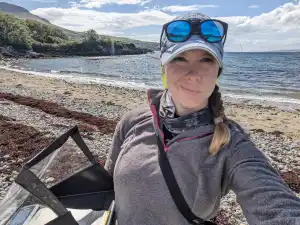
Children today are increasingly disconnected from nature and wildlife. Yet, we know that people are most likely to protect what they love. To nurture future stewards for nature, we must intentionally and compassionately foster a deep connection between children and the natural world. This is especially vital in a time of accelerating climate change, resource depletion, and hyper-industrialisation. Building this bond and respect is not optional, it’s essential for the survival of our planet as we know it.
— Dr Melissa Duncan-Schiele, Project Earthlings Lead
A Word from Our Lead
Children today are increasingly disconnected from nature and wildlife. Yet, we know that people are most likely to protect what they love. To nurture future stewards for nature, we must intentionally and compassionately foster a deep connection between children and the natural world. This is especially vital in a time of accelerating climate change, resource depletion, and hyper-industrialisation. Building this bond and respect is not optional, it’s essential for the survival of our planet as we know it.
— Dr Melissa Duncan-Schiele, Project Earthlings Lead
Project Earthlings launched on World Wildlife Day in late 2023, with a two-pronged mission;
To embed conservation education into school curriculums
&
To connect pupils with real-world researchers and projects
Project Earthlings launched on World Wildlife Day in late 2023, with a two-pronged mission;
To embed conservation education into school curriculums
&
To connect pupils with real-world researchers and projects
Spanning from KG1 to A-level, our core curriculum is fully integratable into standard subjects, making conservation learning part of everyday education.
Schools participating in the programme can collaborate by collecting and analysing data together, creating a powerful network of young conservationists contributing to global understanding of various topics, within regional and relevant themes.
Linking with real local or international research groups, we offer unique partnerships which, through project-based learning, EPQs, ECAs (etc.), expose pupils to conservation in action.
We create simple pupil-led, long-term data collection and analysis methods which have real value in academia and beyond.
Our four pillars
Our four pillars
DISCOVER
Effective Collaboration then leads pupils to DISCOVER. They discover as they research, they discover as they
learn, they discover as they explore outside, they discover new things about themselves.
UNDERSTAND
Discovery, and the excitement that comes with it, help to galvanise key concepts in conservation, building a
deeper comprehension helping the pupils UNDERSTAND. To truly understand something can lead to a new appreciation of it.