Small Steps, Big Impact: Conservation Leaders through After School Activities
Project Earthlings is running three dynamic after-school programmes designed to engage pupils across a wide range of year groups. Whether their interests lie in marine conservation, advocacy or hands-on fieldwork, us after school extracurricular activities (ECAs) are nurturing the next generation of conservation scientists, across our schools.
Pre-Prep Conservation Explorers: Small Steps, Big Impact
Even our youngest learners, in Grades 1 and 2, are discovering how they can play a role in conservation. Recent activities have included designing posters to promote sustainable practices such as turning off taps while brushing teeth and reducing single-use plastics.
The pupils have also enjoyed hands-on projects, from creating imaginative artwork using recycled materials to measuring plush marine animals with conservation tools like tape measures. These interactive activities have provided a playful but meaningful introduction to scientific techniques and environmental awareness.
Wildlife Conservation Academy: Exploring Local and Global Biodiversity
Our Wildlife Conservation Academy is introducing pupils in Grades 3 to 6 to the principles of conservation and sustainable living. Pupils have been having a blast learning about all things ‘conservation science’ and how to be a real researcher, using hands-on activities and learning how to use real conservation equipment.
Through creative and investigative activities, they have explored culturally significant species and habitats within the GCC, as well as the environmental challenges these face. A highlight of the sessions has been the opportunity to produce their own wildlife sketches, an important conservation skills of the ‘explorers of old’, bringing conservation themes to life through art.
Project Earthlings OCEAN: Developing Ocean Ambassadors
Our OCEAN programme is guiding pupils from Grades 7 to 11 into the world of marine conservation, empowering them to become ocean ambassadors. In recent weeks, pupils have been deepening their understanding of threats to marine ecosystems while also sharing their personal connections to the ocean and their sense of responsibility to protect it.
The programme has also introduced pupils to the practical skills of snorkelling and scuba diving, with a strong focus on the safety underpinning these activities. Pupils have been exploring how these skills can support research and conservation of vital habitats such as coral reefs. With our dedicated school research boat, we are preparing to train pupils for fieldwork in the Dimaniyat Islands.
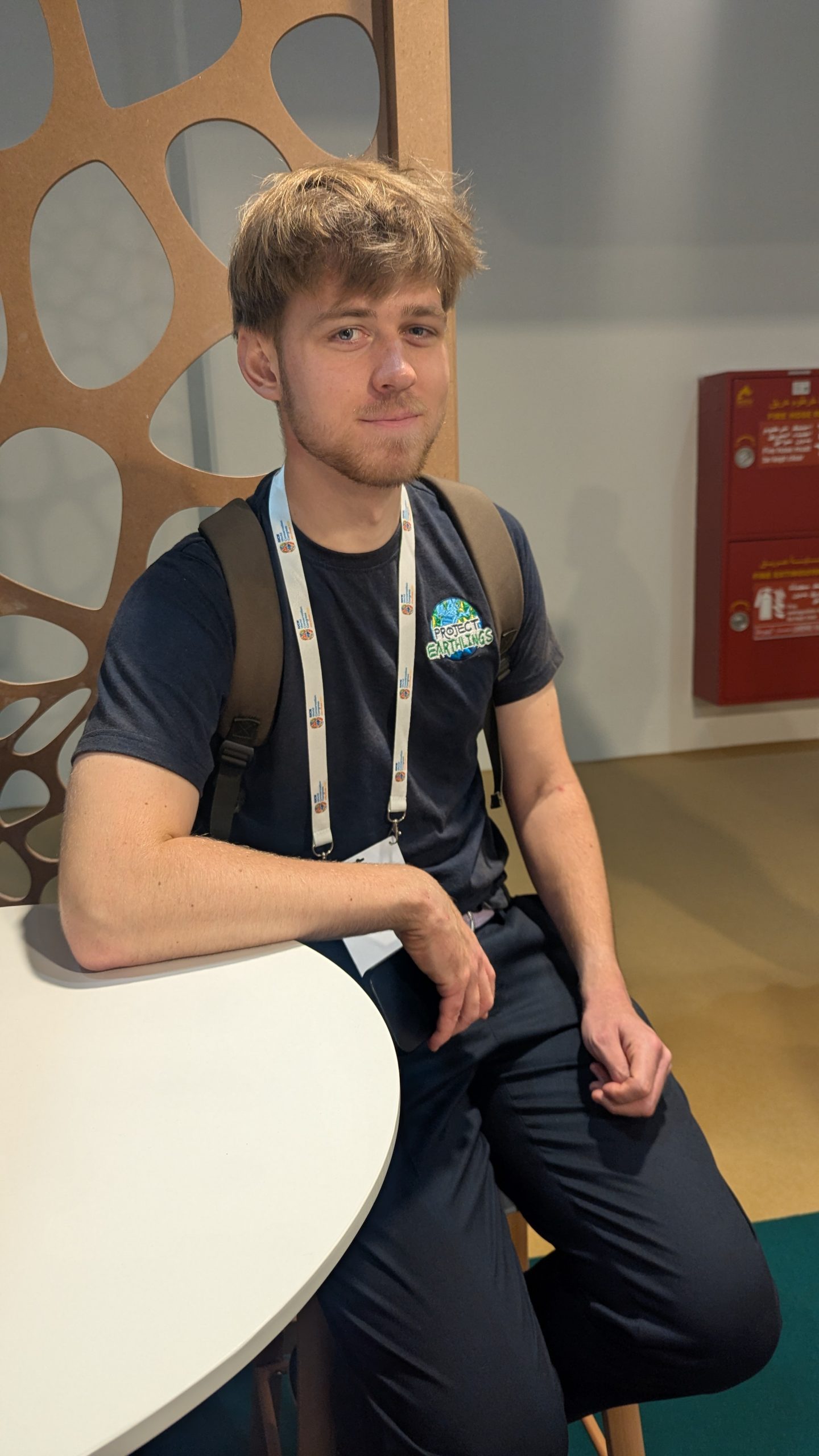
Harry Swain, Project Earthlings Intern and BSc conservation and ecology 2nd year student, Kent University.

Small Steps, Big Impact: Conservation Leaders through After School Activities
Project Earthlings is running three dynamic after-school programmes designed to engage pupils across a wide range of year groups. Whether their interests lie in marine conservation, advocacy or hands-on fieldwork, us after school extracurricular activities (ECAs) are nurturing the next generation of conservation scientists, across our schools.
Pre-Prep Conservation Explorers: Small Steps, Big Impact
Even our youngest learners, in Grades 1 and 2, are discovering how they can play a role in conservation. Recent activities have included designing posters to promote sustainable practices such as turning off taps while brushing teeth and reducing single-use plastics.
The pupils have also enjoyed hands-on projects, from creating imaginative artwork using recycled materials to measuring plush marine animals with conservation tools like tape measures. These interactive activities have provided a playful but meaningful introduction to scientific techniques and environmental awareness.
Wildlife Conservation Academy: Exploring Local and Global Biodiversity
Our Wildlife Conservation Academy is introducing pupils in Grades 3 to 6 to the principles of conservation and sustainable living. Pupils have been having a blast learning about all things ‘conservation science’ and how to be a real researcher, using hands-on activities and learning how to use real conservation equipment.
Through creative and investigative activities, they have explored culturally significant species and habitats within the GCC, as well as the environmental challenges these face. A highlight of the sessions has been the opportunity to produce their own wildlife sketches, an important conservation skills of the ‘explorers of old’, bringing conservation themes to life through art.
Project Earthlings OCEAN: Developing Ocean Ambassadors
Our OCEAN programme is guiding pupils from Grades 7 to 11 into the world of marine conservation, empowering them to become ocean ambassadors. In recent weeks, pupils have been deepening their understanding of threats to marine ecosystems while also sharing their personal connections to the ocean and their sense of responsibility to protect it.
The programme has also introduced pupils to the practical skills of snorkelling and scuba diving, with a strong focus on the safety underpinning these activities. Pupils have been exploring how these skills can support research and conservation of vital habitats such as coral reefs. With our dedicated school research boat, we are preparing to train pupils for fieldwork in the Dimaniyat Islands.
Harry Swain, Project Earthlings Intern and BSc conservation and ecology 2nd year student, Kent University.